Other
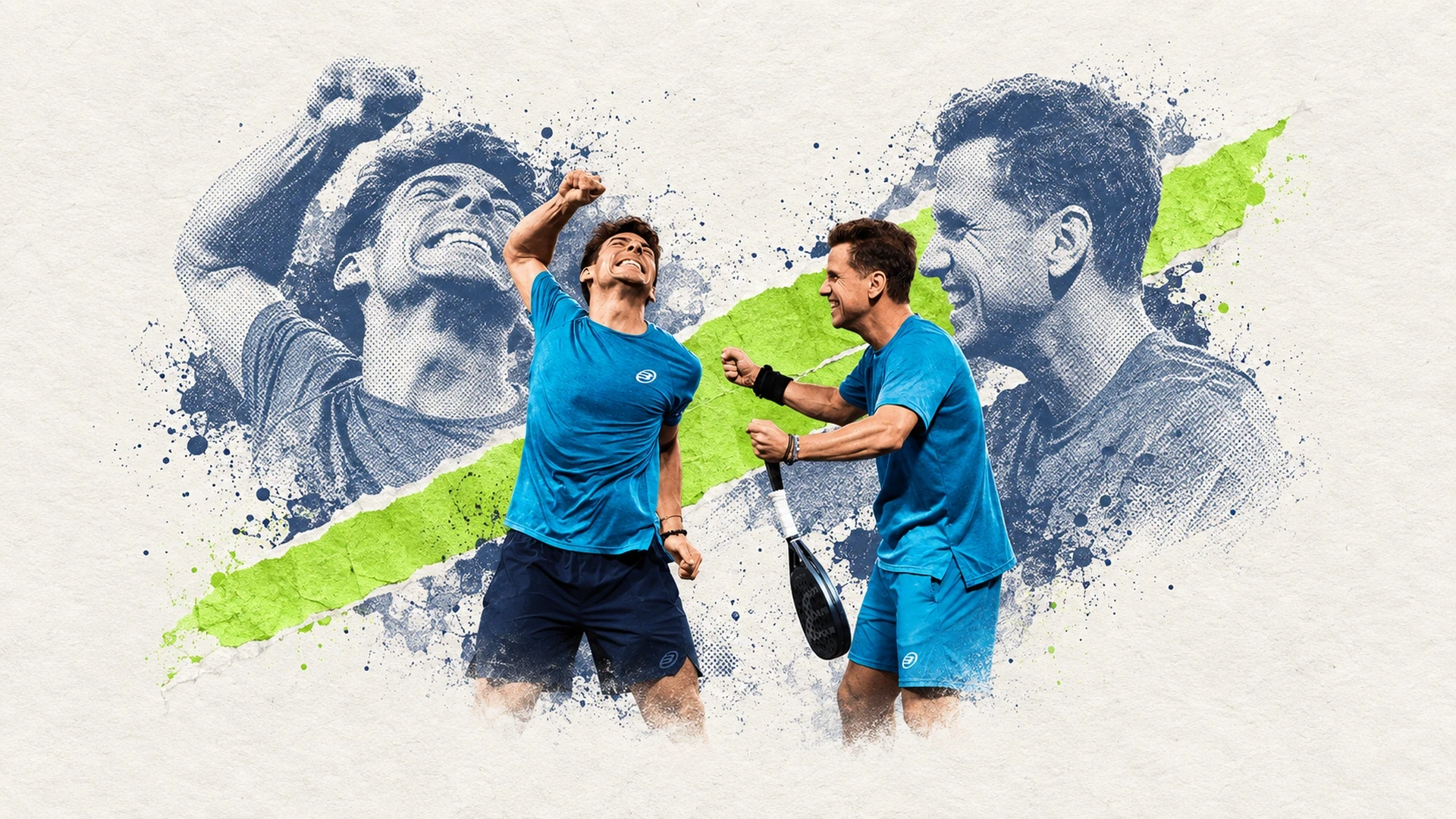
Coello and Tapia returned to winning ways in London, while Martina Calvo claimed a record breaking first title. Both results add interest to a run towards the Gulf, where Kuwait’s upgraded event will carry greater weight this season.
London sent Premier Padel into its summer pause with two different kinds of champion. Arturo Coello and Agustin Tapia restored a familiar order in the men’s competition, beating Alejandro Galan and Federico Chingotto in a final that went to a deciding set. Claudia Fernandez and Martina Calvo supplied the newer story, defeating Gemma Triay and Delfina Brea in straight sets to win their first title together.
For Coello and Tapia, it was an eighth trophy of the year, leaving their principal rivals on six. They had missed the final in Pretoria the previous week, an unusual interruption to a long stretch of appearances in title matches. London gave them an immediate response. Galan and Chingotto pushed the contest deep into the third set, but the leading pair finished the week by adding to their advantage in trophies.
The women’s result was a more substantial change from Pretoria. Fernandez and Calvo had lost to Triay and Brea in that final, then met them again in London only a week later. This time they won. Two tournaments had brought two finals and now a title, a strong beginning for a partnership still establishing its place among the tour’s leading pairs.
Calvo also became the youngest title winner in Premier Padel history. At eighteen, she surpassed the age record Andrea Ustero had set the previous year. The achievement makes her an obvious player to follow when competition resumes, but the partnership deserves attention as a whole. Fernandez brings her own experience of winning important matches, and the speed with which they have begun to produce results together is part of what made London significant.
The next events will show how well that early understanding holds when opponents have more opportunities to examine it. The tour resumes with Madrid at the end of August, followed by the Paris Major. There is time for the leading pairs to change form before the Gulf events arrive, and padel’s regular changes of partner can alter the competition further. London has provided a useful picture of the current order without fixing the autumn’s results in advance.
Kuwait will play a larger part in that autumn than originally planned. Its event, scheduled for October 26 to 31 when the calendar adjustment was announced, has been upgraded from P1 to Major for the 2026 season. The change followed disruption to the tour’s plans in the region and brings more ranking points and prize money into a late part of the year. A Major title carries 2,000 ranking points, making a successful week especially valuable.
The location already holds encouraging memories for Galan and Chingotto. They won the FIP World Cup Pairs in Kuwait last November after coming back against Coello and Tapia in the final. That result gives their return an obvious reference point, although the upgraded tour event is a different competition. The same players can arrive with different form, and the memories of a previous win do not spare them the work of reaching another final.
Dubai follows at Hamdan Sports Complex in November, with the event running from the eighth to the fifteenth. It is the final P1 on the calendar, giving it an important place in the closing stages of the season. The Mexico Major still follows before the Barcelona Finals, so there will remain another substantial opportunity for the standings to change after the players leave the Gulf.
Last year’s Dubai winners offer another connection between the old and new partnerships. Fernandez took the women’s title alongside Bea Gonzalez, while Coello and Tapia won the men’s event after their defeat in Kuwait. The sequence showed how quickly the leading players can answer a disappointing final with a better week. Fernandez’s new partnership with Calvo now adds a different prospect to her possible return.
The top sixteen players in each of the men’s and women’s season Race qualify for Barcelona. That makes the later tournaments relevant beyond the pairs competing for the number one position. For players near the qualification places, one additional round or an unexpected early defeat can have a material effect. Kuwait’s higher category increases the value of that opportunity as well as the pressure attached to it.
Gulf spectators will also see the Star Point system introduced this season. At deuce, a game can continue through two advantage stages. If neither stage settles it, one deciding point determines the winner. The rule limits how long a game can cycle through repeated advantages, while preserving some of the familiar tension before the final point. It gives players another situation in which preparation and the choice of return become especially visible.
The region’s place in padel is already established through its tournaments and its part in the tour’s development. This autumn, the sporting interest is particularly clear. Coello and Tapia remain the pair being pursued, Galan and Chingotto have shown they can beat them in Kuwait, and Fernandez and Calvo have quickly turned promise into a title. The weeks before the Gulf events will develop those stories further. Kuwait and Dubai then offer substantial stages on which the players can change them again.