Other

A first handball title, a record seven UAE golds and medals across ten sports for Qatar gave the region plenty to celebrate in Japan. The results also show where the work begins before the Games return to the Gulf in 2030.
Fadhul Ahmed scored Bahrain’s winning goal in the 60th minute of the Asian Games handball final. Qatar, champions at the previous three editions, were beaten 33 to 32. Bahrain had led by a single goal at half time and finished with that same narrow advantage, enough to claim a title they had never won before.
The final brought two of the Gulf’s strongest teams together, with a continental title unsettled until the last minute. When the Games closed on Sunday, the six GCC countries had accumulated 81 medals, including 32 golds. Bahrain finished highest among them, tenth overall with 22 medals, while the UAE won more golds than at any previous Asian Games.
There were different reasons for satisfaction across the region. Qatar’s medals came in ten sports. Saudi Arabia found champions in a teenage jiu jitsu athlete and a rider still winning at 54. Kuwait returned with titles in shooting and karate, while Oman put two sprinters on the same podium. With Doha receiving the Asian Games flag for 2030, those results offer a useful starting point for the next four years.
Bahrain’s 11 golds, five silvers and six bronzes included another productive athletics campaign. Birhanu Balew retained both the 5,000m and 10,000m titles, winning the shorter race in 13:30.79 after making his move on the final lap. His victories supplied continuity in a sport that has long been important to Bahrain’s standing at the Games.
The new achievements were equally worth following. Mikhail Arkhangelskiy won the men’s 50m butterfly in 22.91 seconds, equalling the Asian record and becoming Bahrain’s first Asian Games swimming medallist. In handball, Kadhem Ahmed converted all seven of his shots in the final, while Fadhul finished with seven goals from nine attempts. Those details help explain how Bahrain found enough scoring accuracy to take gold from an opponent accustomed to winning it.
That combination matters when assessing the whole campaign. Bahrain could celebrate established champions repeating their success and teams or individuals reaching a new level in other sports. A place in the top ten was supported by both.
The UAE finished with seven golds, five silvers and a bronze, placing 13th overall. Five of those golds came from jiu jitsu, which contributed eight of the country’s 13 medals. The clearest evidence of depth was in two finals contested entirely by Emirati athletes: Khaled Al Shehhi defeated Omar Al Suwaidi in the men’s under 62kg division, while Balqees Abdulla beat Al Anoud Al Harbi in the women’s under 48kg event.
Asma Al Hosani also retained her women’s 52kg title by beating South Korea’s Eonju Im. For a delegation seeking reliable medal opportunities, having several athletes capable of winning at this level is a considerable advantage. It also sets a demanding standard for the competitors trying to earn those places next time.
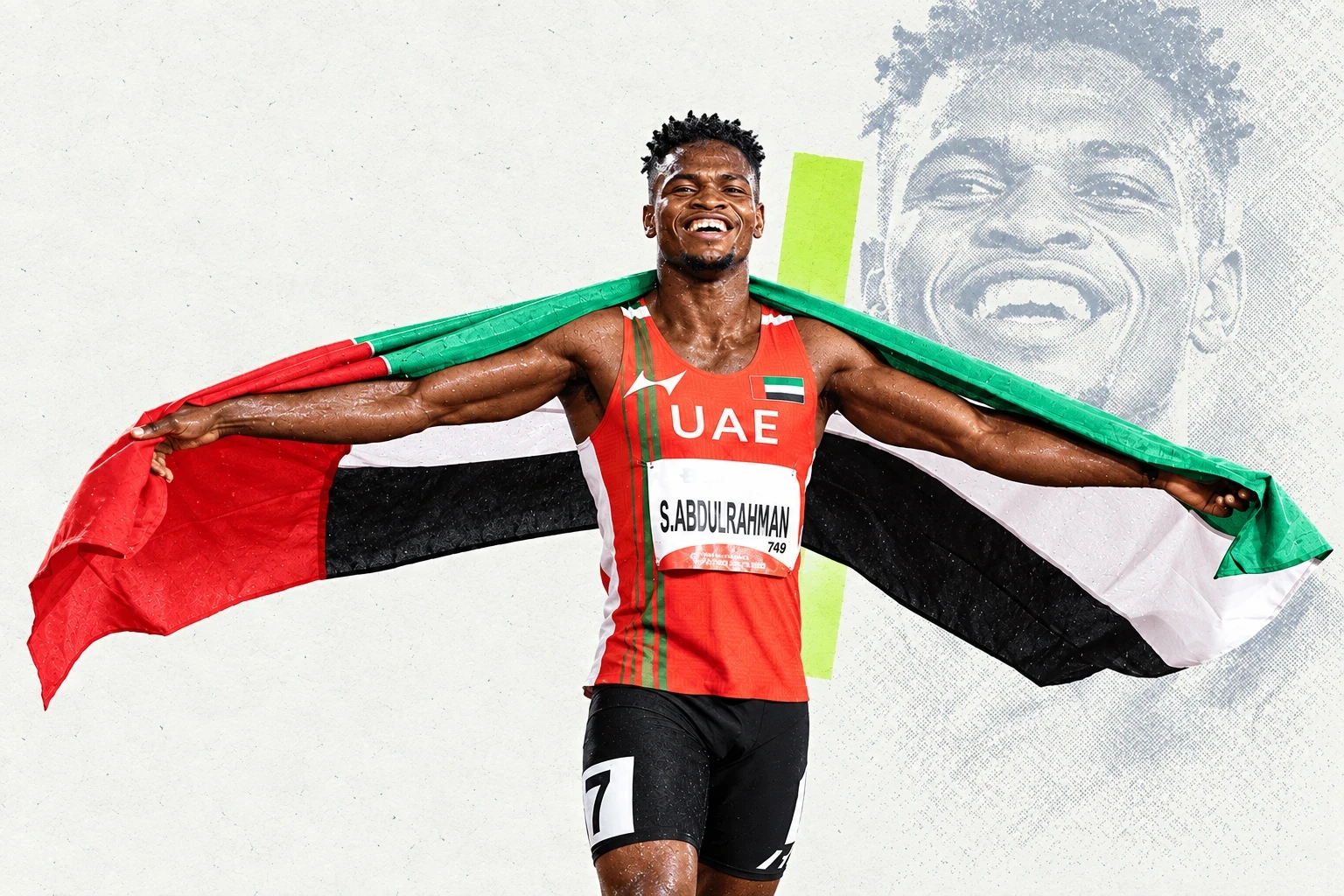
Mariam Kareem’s 400m hurdles gold and Kazbek Naguchev’s judo title completed the UAE’s seven wins, surpassing the previous national best of five golds in Hangzhou. Show jumping supplied two silvers, including Abdullah Humaid Al Muhairi’s individual medal on the final day. The overall total was smaller than Bahrain’s, but the improvement in gold medals was clear.
Qatar’s closing total was particularly balanced: six golds, six silvers and six bronzes, good for 14th overall. The Qatar Olympic Committee reported medals in ten sports, with padel, wrestling and karate entering the country’s Asian Games medal record for the first time. Qatar’s first padel title was part of a wider campaign that gave the next host success across several parts of the programme.
Some of the most satisfying work came from champions defending their positions. Cherif Younousse and Ahmed Tijan lost the opening set of the beach volleyball final to Indonesia 21 to 19, then recovered to take the second 21 to 16. A 6 to 2 lead in the decider gave them room to finish the match 15 to 8 and secure their third consecutive Asian Games gold.
That recovery is a useful detail amid the celebrations. Qatar had the experience of winning this event twice before, yet still had to respond to a final going against them. Their 18 medals, completed by gold and bronze in individual show jumping, leave Doha with athletes and performances to promote as well as an event to organise.
Saudi Arabia finished with 17 medals, comprising four golds, three silvers and ten bronzes. At 19, Abdullah Nada won the men’s under 85kg jiu jitsu title on his Asian Games debut, beating Kazakhstan’s Merey Kabdullayev 7 to 0. The Saudi team collected two golds and three bronzes in the sport.
Ramzy Al Duhami’s experience was considerably longer. The 54 year old rider and Untouchable 32 completed five clear rounds across the team and individual jumping competitions, adding the Individual B title to Saudi Arabia’s team gold. In the final jump off, their penalty free round in 42.59 seconds proved enough. It was Al Duhami’s sixth Asian Games gold and his second individual title, 16 years after the first in Guangzhou.
There was a significant first elsewhere in the Saudi team. Dina Mustafa’s karate bronze, secured with an 8 to 7 victory over Nepal’s Erika Gurung, made her the first Saudi woman to win a medal at the senior Asian Games. Alongside Nada’s debut title, it gives the delegation new achievements to build on while its experienced riders continue to deliver.
Kuwait’s nine medals included four golds, a silver and four bronzes. Khaled Al Mudhaf won the individual trap title and shared team gold with Talal Al Rashidi and Abdulrahman Al Fayhan. Abdullah Shaaban improved on his Hangzhou silver by winning the men’s under 60kg karate kumite title against Qatar’s Abdelrahman Abdelhamid. The men’s team kata title completed Kuwait’s four golds, all of them earned in shooting and karate.
Oman’s two medals came together. Ali Al Balushi ran 10.04 seconds for silver in the men’s 100m, with Mulham Al Balushi taking bronze in 10.11 behind Thailand’s Puripol Boonson, who won in 9.90. It was the first time two Omani athletes had reached the podium in the same Asian Games event.
The next step has a practical local dimension. Oman athletics president Saeed Al Hajri told the Oman News Agency that the federation intended to use the pair’s success in talent identification through its five existing centres, develop school partnerships and involve the medallists in school and community events. That is a specific way of giving a result from Japan a longer life at home, although its value will depend on the athletes who follow.
Doha’s flag handover on Sunday gave the region a clear destination for the next cycle. The results in Japan leave established champions with titles to defend and new medallists with a chance to become regular contenders. Between now and 2030, the useful measure will be whether these champions keep improving and whether more athletes can join them in finals, giving Gulf supporters an even wider range of contests to follow when the Games return.