
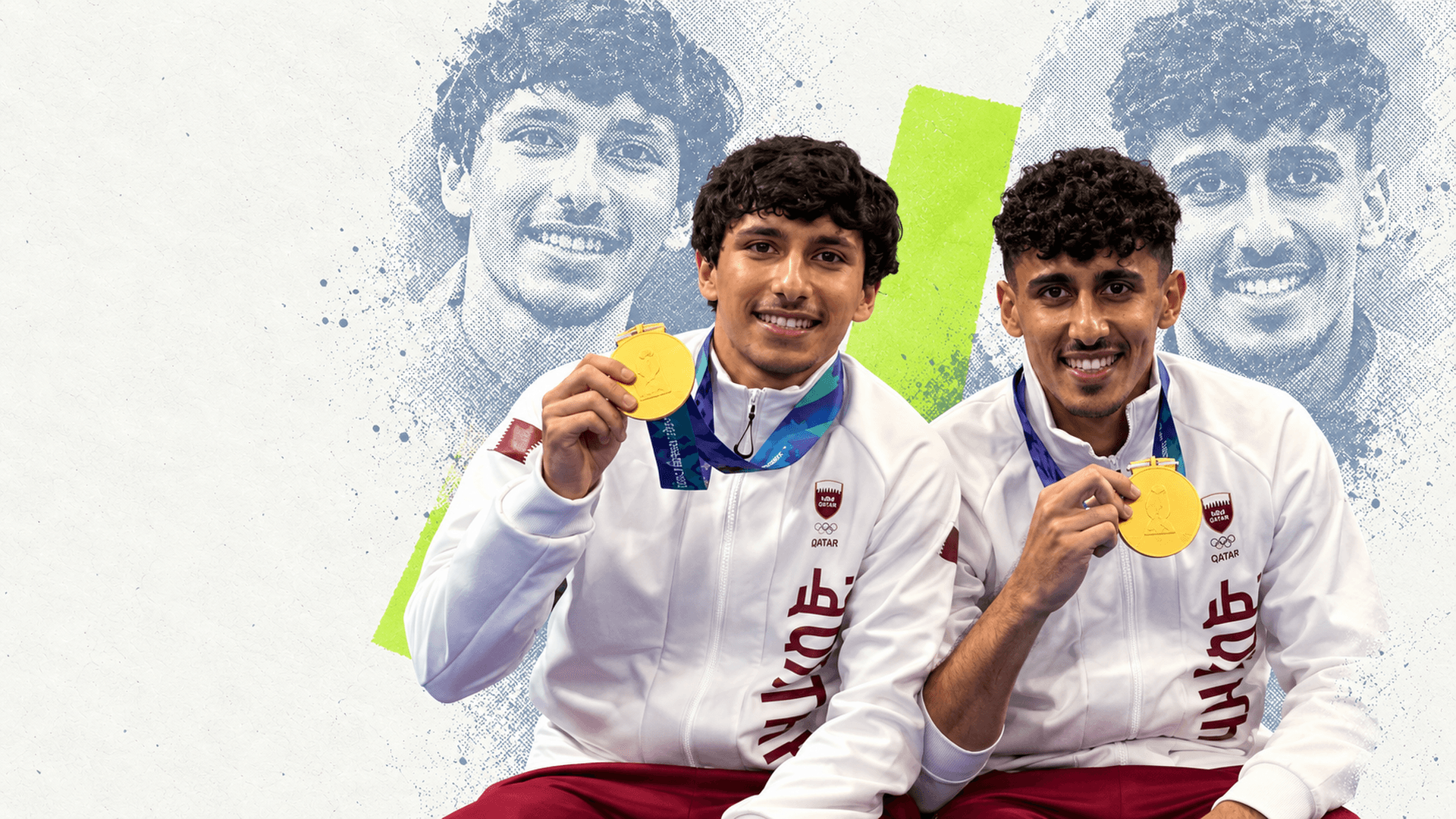
Qatar take Asian Games padel gold before the World Cup comes home
Mashari and Rashed Naif won the first Asian Games men’s padel title without dropping a set. A month before Doha hosts the World Cup, their victory gives Qatar a result to celebrate and a partnership to follow.
Before the final in Nagoya, Rashed Naif had a simple explanation for his confidence. “I completely trust my brother,” he told the International Padel Federation after their semi final win. By Saturday evening, he and Mashari had given Qatar its first Asian Games padel gold, beating Malaysia’s Christian Chin and Aidan Yunus 6 to 3, 6 to 1 to complete a tournament in which they never lost a set.
The brothers had arrived as the top seeds in a field of 20 men’s pairs. Four victories later, they left the Nagoya City Higashi Sports Center with the first men’s title awarded since padel joined the Asian Games programme. For Qatar, the timing adds to the pleasure. Doha will host the FIP World Cup from November 2 to 7, giving supporters a chance to turn their attention from a result in Japan to a national team competition much closer to home.
There was little waste in the brothers’ route through the draw. After a bye in the opening round, they beat Kuwait’s Abdulaziz Redha and Fouad Behbehani 6 to 1, 6 to 0. The UAE’s Fares Aljanahi and Abdulla Alabdulla offered their next test in the quarter finals, but Qatar came through 6 to 2, 6 to 3. Those results put the leading seeds into the last four with their record intact.
Iran’s Hami Golestan and Arya Roghani were beaten 6 to 4, 6 to 2 in the semi final. Across the other half of the draw, Chin and Yunus had needed three sets in each of their first three matches. They reached the final by recovering from a 6 to 1 opening set defeat against Iran’s Farsad Shahi and Amirmohammad Jamshidi, winning the next two sets 6 to 4 and 6 to 1.
That recovery meant Malaysia had already shown it could win after a difficult start. Malaysia had been seeded third, the highest seeded opposition the brothers faced during their four matches. Qatar gave the pair no such route back in the final, conceding only one game in the second set. The brothers won all eight sets they played, completing a clean run through four rounds against four different countries.
Mashari’s reaction captured the scale of the occasion for the players. “Winning gold at padel’s Asian Games debut is something huge for us,” he told FIP. Qatar’s Olympic Committee later reported that the delegation had celebrated the padel champions alongside its beach volleyball gold medallists and wrestling bronze medallist at Bayt Qatar in Nagoya. Padel had contributed to the country’s Games campaign at its first opportunity.
Japan took the women’s title, with Kae Tokumoto and Saki Tsukamoto beating Indonesia’s Fitriani Sabatini and Fadona Kusumawati in straight sets. The hosts and Qatar therefore shared the two gold medals available in padel’s debut. The competition had brought together 20 men’s pairs and 23 women’s pairs over six days, giving the sport a place in a Games programme that extends well beyond its own regular tournaments.
For the brothers, representing Qatar in an important final was already familiar. At last October’s FIP Asia Padel Cup in Doha, they won their match in the men’s team final against the UAE, bringing Qatar level before the Emiratis took the deciding rubber and the title. The result was a reminder of how a strong pair’s contribution fits within a wider team effort. Qatar won an individual pairs gold in Nagoya; November will ask more of the national squad as a whole.
The World Cup will bring 16 men’s teams and 16 women’s teams to the Khalifa International Tennis and Squash Complex. Qatar has places in both competitions as host, while the UAE men are also already qualified. Argentina, Spain, Portugal and Italy are among the other countries confirmed for the men’s event, broadening the opposition considerably from the Asian Games field.
The remaining places will be settled in Kuwait from October 26 to 30. National teams from Asia and Africa will compete for one men’s berth and one women’s berth, completing the line up only days before play begins in Doha. European qualifying finished in September, with Germany advancing in both competitions, the Netherlands joining the men’s field and Great Britain securing a women’s place.
For Gulf followers, that makes the coming weeks unusually easy to follow through the region. Kuwait will decide who joins the World Cup, then Doha will stage it. The Qatari brothers’ gold provides a reason to watch the home team as closely as the established international contenders. Their Asian Games results can raise interest and expectations, even though a wider field and a team format will make November a different examination.
There is a longer connection too. Doha will host the next Asian Games in 2030, and Mashari was already looking towards the opportunity to defend the title at home when he spoke after the final. Four years is a considerable distance in a sporting career. For now, Qatar can enjoy a more immediate prospect: welcoming the World Cup a month after two brothers justified their top seeding and put their country first on the Asian Games men’s padel honours list.